
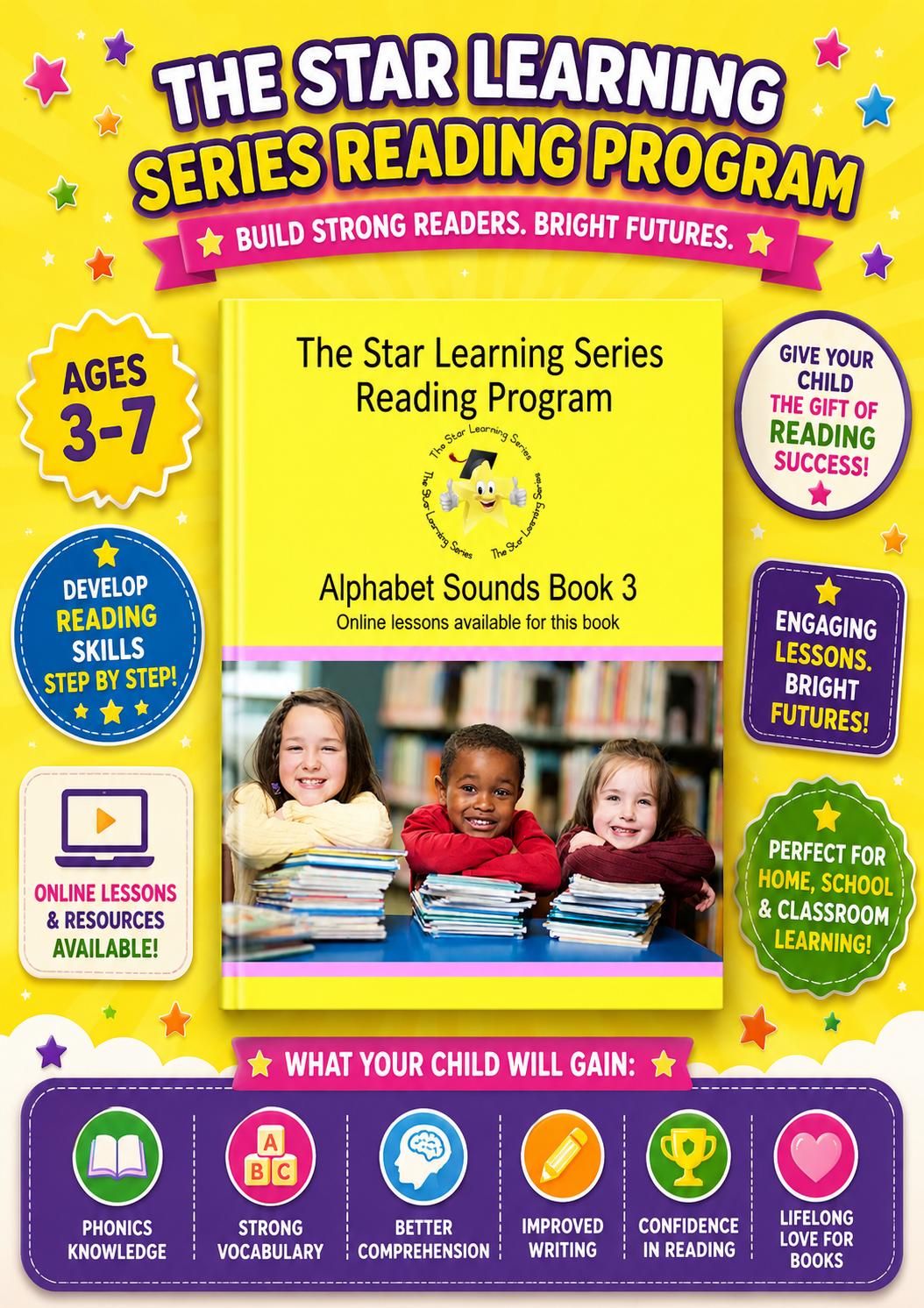
Description
Book 3 focuses on building Reading Superpowers:
Why Simple Sounds and Words are Key for Your child to learn to read.
Introduction: Your Child’s Reading Adventure
As your child enters the world of reading they’re embarking on an exciting journey to become a confident reader and writer. This book is all about building strong foundations, and two very important “building blocks” are CV sounds and CVC words. Think of them as the “training wheels” that help your child learn to ride the bicycle of reading!
This guide will explain what these terms mean and why they are so crucial for your child’s success in reading and spelling.
What are CV and CVC Words?
It sounds a bit technical, but it’s quite simple!
- CV (Consonant-Vowel) Sounds/Words:These are words or parts of words where a single consonant sound is followed by a single vowel sound. For example, “ba,” “be,” “bi,” “bo,” or “bu.”
- CVC (Consonant-Vowel-Consonant) Words:These are typically three-letter words that follow a predictable pattern: a consonant sound, then a vowel sound, then another consonant sound. Think of words like “bat,” “beg,” “bun,” “big,” or “bop.”
Why Are These Simple Words So Important?
CVC words are fundamental because they help your child in several powerful ways:
- Hearing the Sounds (Phonemic Awareness):Before your child can read, they need to understand that spoken words are made up of individual sounds. CVC words are perfect for practicing this “ear skill.” Your child learns to:
- Blend sounds:Put individual sounds together to make a whole word (e.g.do +g becomes “dog”).
- Connecting Sounds to Letters (Phonics):CVC words have very consistent spelling patterns, making them perfect for learning how letters represent sounds. This helps your child:
- Decode (Read):Sound out new words by knowing what sound each letter makes.
- Encode (Spell):Write words by listening for the sounds and choosing the correct letters.
- Reading Smoothly and Understanding (Fluency & Comprehension):When your child can quickly and easily read CVC words, their brain doesn’t have to work as hard to sound out each word. This frees up their mental energy to focus on understanding what they are reading. This leads to smoother reading and better comprehension.
- Building Confidence:Successfully reading simple CVC words gives children a huge boost of confidence! These “small wins” make reading feel fun and achievable, motivating them to keep learning and exploring new words.
Beyond CVC Words: A Stepping Stone
CVC words are just the beginning! Once your child masters them, they’ll be ready for more complex words like:
- CCVC words(e.g., “frog,” “stop” – with two consonant sounds at the beginning).
- CVCC words(e.g., “lamp,” “desk” – with two consonant sounds at the end).
- And even longer words, as CVC patterns are the most common type of syllable in English!
Conclusion: A Bright Future for Your Reader
By focusing on these foundational skills – hearing and playing with sounds, connecting them to letters, and practicing handwriting – you are giving your child the best possible start. This strong foundation will not only help them become fluent and confident readers and writers but will also set them up for success throughout their entire academic journey and beyond.

Reviews
There are no reviews yet.